
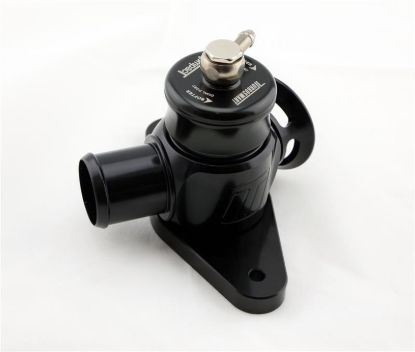
Blow Off Valve - TS-0203-1008
turTS-0203-1009
Turbosmart 07-13 Mazda Mazdaspeed3 / 06-12 Mazda CX7 2.3T Kompact Dual Port Blow Off Valve
265,83 € excl. VAT
Where should the pressure go when you lift off the throttle on a turbocharged engine? A dual-port blow-off valve opens to release excess boost pressure and distributes the air through two outlets. This category is for you if you want precise control of pressure relief in your project.
When the throttle closes, the boost pressure between the turbo and the throttle body has nowhere to go. The valve opens and directs the pressure away from the compressor. A dual-port model typically has two outlets: one that routes the air back into the intake, and one that vents to atmosphere. You can find other types under blow-off valves.
Start with the car. For example, according to the product name, the Turbosmart Kompact Dual Port Blow Off Valve is intended for the Mazda Mazdaspeed3 (07-13) and Mazda CX7 2.3T (06-12). Then look at:
After installation, you should check hoses and clamps for leaks. You can find more parts from Turbosmart on the brand page.
A dual-port valve typically has two outlets, so part of the air can be routed back into the intake and the rest vented. How the air is split depends on the specific product.
It depends on the product and the car. Venting to atmosphere can matter at inspection, so check the approval for the specific part number before you install the valve.
Typical causes are leaking hoses, a valve that does not stay sealed at your boost pressure, or engine management that cannot handle the air vented after the mass airflow sensor.